

A different approach to the body: Notes from China
China felt very different from the moment I arrived. Not in an overwhelming way, but in the sense that everything runs on a slightly different rhythm and is probably meant to, but definitely one that takes a bit of time to adjust to.
I went there for the race, but what I experienced around it ended up being just as impactful. It was the experiences, the small interactions and especially the way the body is approached in everyday life.
Traditional Chinese Medicine: What It Actually Feels Like
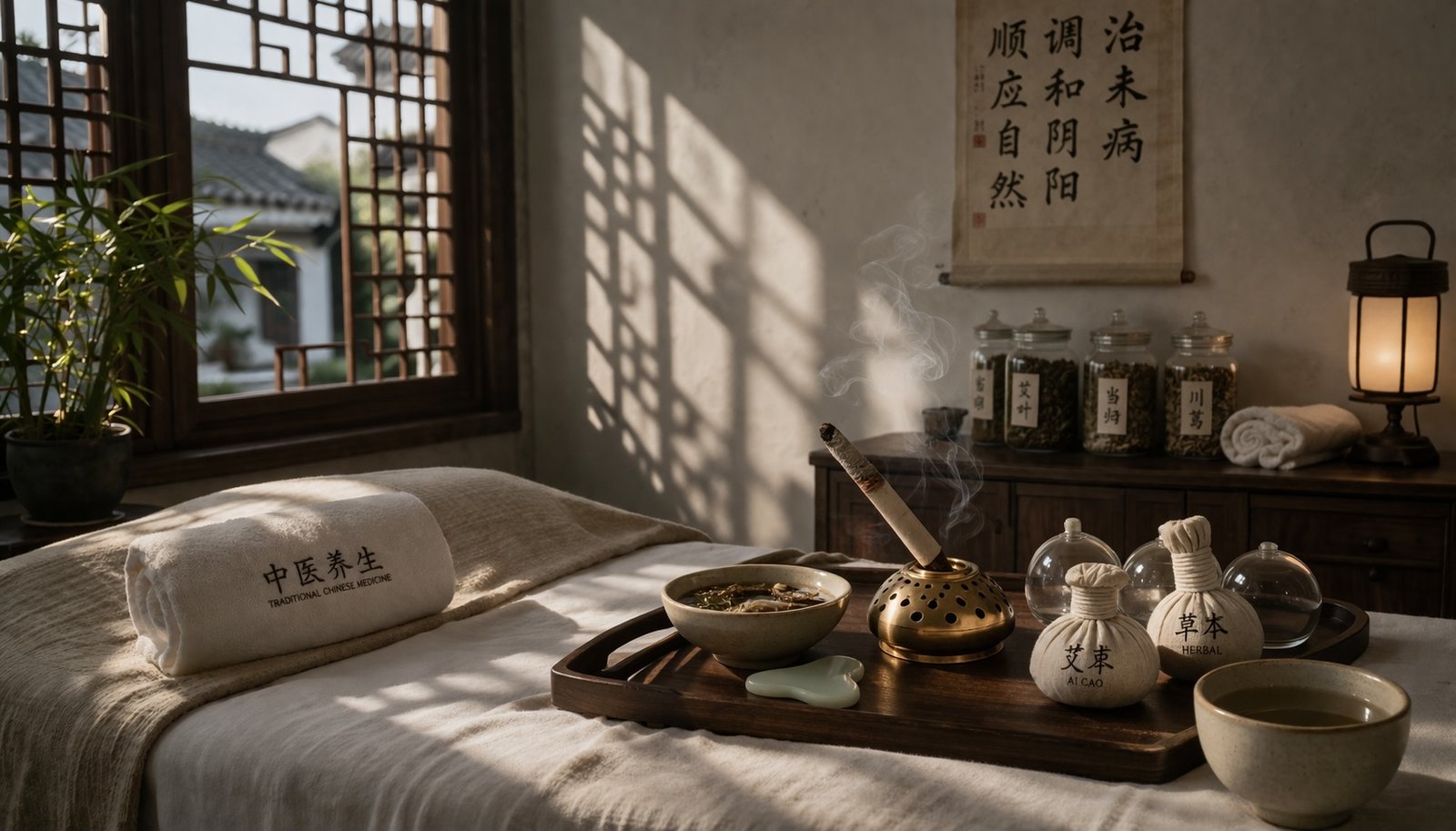
One of the most interesting parts of the trip was getting a closer look at Traditional Chinese Medicine (TCM).
I visited a local treatment space where I tried several things I had never experienced before: Gua Sha, moxibustion and a traditional head spa using Chinese herbs. None of it felt curated or “for tourists” – it was very real, very direct and slightly uncomfortable, but in a way that made it even more interesting.
Gua Sha is probably the most known in the Western world. It involves scraping the skin with a smooth tool to stimulate circulation and release tension. It’s quite intense, but you can clearly feel that something is happening underneath the surface. It’s not subtle, but it’s effective.
Moxibustion was completely new to me. It involves burning dried mugwort close to the body, near specific points, allowing heat to penetrate deeply into the muscles and tissues. The idea behind it is to support circulation, warm the body, and restore balance in the flow of energy, or what they call the “Qi.” It’s a very different sensation.
 Another appointment on the agenda: the headspa! It was done using warm Chinese herbal infusions, massaged slowly into the scalp, neck and shoulders. The treatment felt incredibly grounding and purifying – not just relaxing, but almost regulating. The combination of warmth, pressure and the herbal elements created a very distinct sensation. You could feel how much tension sits in the head and upper body, especially without realizing it on a daily basis.
What I found interesting is that none of these treatments were about quick results or surface-level effects. Everything was focused on circulation, balance and long-term support of the body. It’s a very different approach compared to what we’re used to in Europe, where treatments are often more outcome-driven or aesthetic-focused.
The experience itself wasn’t entirely easy
 There was a clear language barrier – no one spoke English – so everything was based on gestures, observation & a certain level of trust. Normally, I like to understand exactly what’s happening, but here that wasn’t really possible. And surprisingly, that was part of what made it so impactful.
It forced me to step back, let go of control and just go with the process. Everyone I interacted with was extremely kind and patient, even without being able to communicate directly. There was no pressure, just a sense of care.
That same feeling showed up in other moments as well.
One situation in Shanghai stood out in particular. I was in the city center alone, my phone battery almost gone, and no way to charge it. None of the usual solutions worked, and I still needed to get back to the hotel, which was about an hour away.
I ended up meeting a group of girls who immediately offered to help. They tried to translate, looked for options, and when nothing worked, they simply gave me their own charger. They stayed with me while my phone charged, making sure I’d be okay. It turned what could have been a stressful situation into something very simple and human. We spoke in a mix of languages, shared small things about our lives. They were from the Chinese countryside, so curious, asking about Europe, sharing little pieces of their world with me. It was very refreshing and nice.
Another detail I noticed everywhere was the way water was served.
Always warm. In restaurants, when leaving, even on the go – it was consistent. At first, I didn’t think much of it… but then I learned that in traditional Chinese medicine, this is very intentional.
According to TCM principles, the body prefers warmth. Cold water, especially when consumed regularly, is believed to weaken digestion and slow down the body’s internal processes. The digestive system is seen as a kind of “internal fire,” and drinking cold water is like pouring ice over it; it dampens that fire, making it harder for the body to properly break down food and absorb nutrients. Warm water, on the other hand, supports circulation, aids digestion and helps maintain balance within the body. It’s gentle, nurturing; something that works with your system instead of against it.
And I have to say… I really loved that. There was something so simple yet so intentional about it. A small habit, but one that carries so much awareness behind it.
That’s probably what stayed with me the most from China: this deep sense of connection to the body, but also to people. The idea that everything is linked, that nothing is random, and that even the smallest daily rituals – or small acts of kindness – can have such a meaningful impact.
China challenged me, surprised me, and opened my eyes in ways I didn’t expect. And while I’m still integrating everything, I know this experience will stay with me.

Read article on Medium
POST COMMENT