

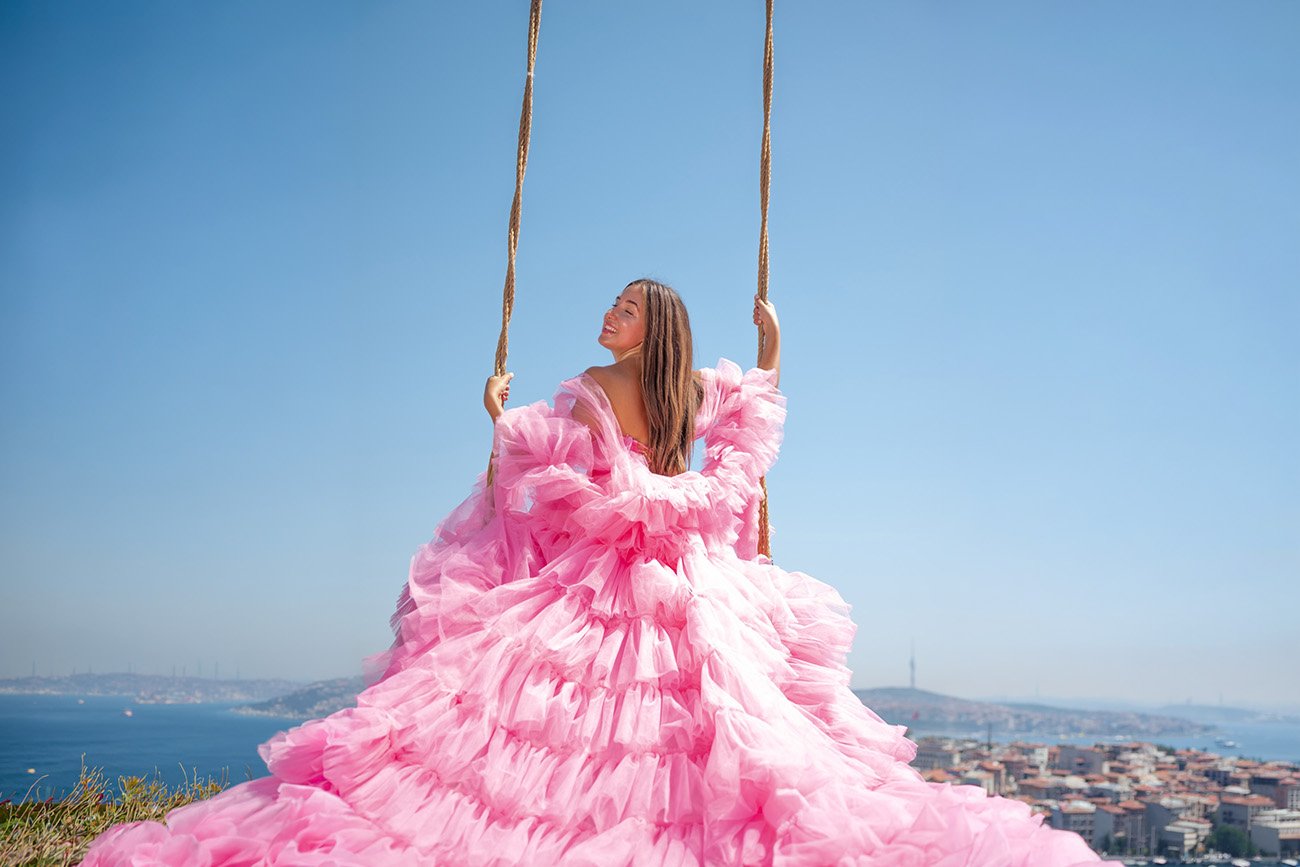
Competence doesn’t come from minimising yourself – no matter how often you’ve been made to feel that you should
As a woman in F1, there’s a quiet assumption I’ve encountered more than once in professional spaces, rarely said out loud, but felt all the same: that style and competence somehow compete with each other. If you care about how you look, you must care a little less about how capable you are, or that is: you cannot be chic and clever at the same time. If a woman is well put together, or simply enjoys looking the way she does, her competence must be up for debate. As if beauty/style and competence are somehow in competition with each other. As if interest in fashion, makeup, or style automatically subtracts from intelligence, authority or seriousness. I’ve never quite understood that logic and as a woman in F1, I’ve had plenty of time to think about it.
How We Look Has Always Been a Form of Communication
The way we look has always been a form of communication. Let’s be honest. Long before we speak, we signal presence, intention, awareness. To dress with care or enjoy aesthetics isn’t vanity, it’s a way of expression that introduces you before you even open your mouth. And yet, it’s often treated as something that needs to be justified or toned down to be taken seriously. What’s interesting here though, is how selective this judgment can be. A man in a perfectly tailored suit is read as powerful, disciplined, intentional etc… A woman who takes equal care is more likely to be questioned and seen as trying too hard, or not prioritising the “right” things. Which suggests the issue was never aesthetics themselves, but who is allowed to embody them without explanation.
I’ve noticed how often women are subtly expected to choose. As if competence requires neutrality. As if seriousness has a uniform. It doesn’t. You can love speed, engineering, performance and strategy and still care about style, texture, beauty and the ritual of getting ready. You can understand the mechanics of a race car and appreciate the structure of a blazer. These things don’t contradict each other. I’d say they live very comfortably in the same person.
F1 itself is a good example of this shift. What used to be seen as purely technical and traditionally masculine is opening up. Formula 1, in particular, has evolved into a cultural space as much as a sporting one. Fashion houses, beauty brands and lifestyle labels are entering the scene, not as decoration but as part of the narrative. For a woman in F1 specifically, this shift matters. The paddock isn’t only about lap times anymore; it’s about identity and storytelling. And the sport hasn’t lost its edge. If anything, it’s gained dimension. The same is true for people. Beauty doesn’t make you less competent. Often, it requires more intention. Style isn’t accidental. It’s curated, considered, refined – qualities that are not far removed from leadership or strategy.
You Don’t Owe Anyone Simplicity
I’ve learned that you don’t owe anyone simplicity. You don’t have to flatten yourself to be understood or fit a version of professionalism that was never designed with you in mind. To take that on another, more general level: you don’t have to trade one interest for another to feel legitimate. You’re allowed to be analytical and emotional, precise and aesthetic, interested in data and design, motorsport and makeup. The ability to move through different dimensions of yourself with clarity doesn’t make you less serious about what you do. If anything, it suggests a deeper sende of self. The most interesting people are rarely one-dimensional. Why should we be? Beauty and style aren’t a distraction from competence. They’re a language. A way of saying: I care and I choose deliberately. And in a world that’s slowly learning to value authenticity and depth, that combination is powerful. It was never either-or. It was always both.
With love, Nives
Download this article
If you like this article, you can save it for future

Read article on Medium
POST COMMENT