

The hidden impact of high-performance environments
On pressure, adaption and staying connected to yourself
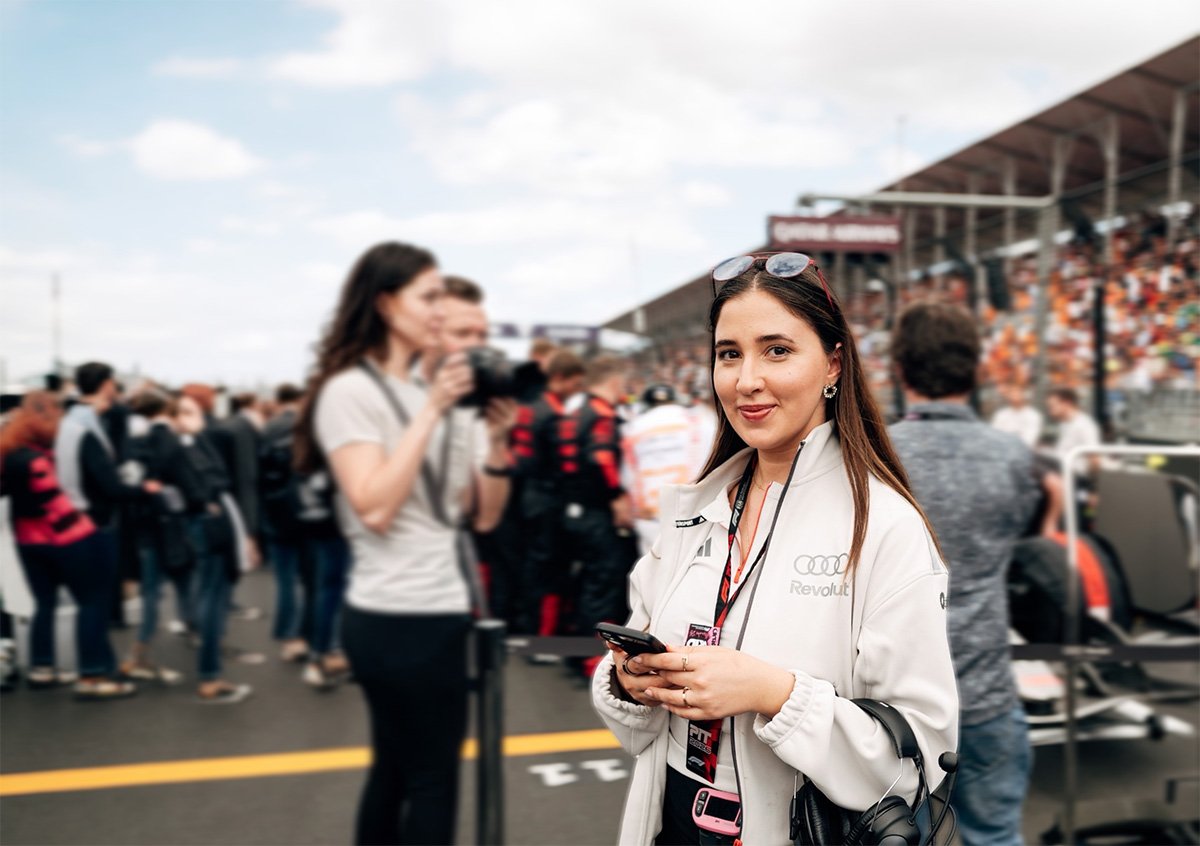
F1 performance culture is probably the clearest lens I have for understanding how elite environments actually shape a person. It is a world I am very privileged and grateful to be part of and one that has taught me more about pressure, adaptation and self-awareness than I expected.”
There’s something about high-performance environments that’s hard to explain unless you’ve been inside one. They sharpen you and you learn quickly and you become precise. You start thinking in systems. Standards go up almost without you actively deciding they should. Suddenly “good” isn’t good enough anymore and you kind of like that, because it pushes you. You naturally begin to aim higher.
There’s a certain energy in these environments – people who care deeply about what they do, who operate with focus and consistency, and who are willing to dedicate a large part of their lives to it – with 24 races on the calendar – this is what happens in F1. I’ve always been drawn to that. Not necessarily in a way I could explain, but more as a natural pull toward environments where things move, where expectations are high, and where performance is part of the culture rather than the exception.
It’s not just about performance – it’s about awareness
HOW F1 Performance Culture Actually SHAPES You
But lately, I’ve been thinking less about what the core of these environments is – and more about what they shape quietly in human beings. Because they don’t just improve your skills. They shape your nervous system. When you’re constantly operating at a high level, urgency becomes your baseline. You get used to pressure. You get used to pressure, and you learn to regulate quickly because there’s no real alternative. Emotional control isn’t something you think about – it’s just how you function.
And in many ways, that’s a strength. I’ve grown a lot because of it. I’m more resilient. More structured. More disciplined than I was years ago. But I’ve also noticed something else: When performance becomes your normal state, you don’t always realise how much of you is adapting to it. You move faster in conversations, you measure time more tightly. You default to efficiency. Even in personal moments, there’s a quiet tendency to “optimise”. I noticed this recently: Approaching something that didn’t need a solution as if it were a problem. Trying to structure a moment that would have been better left open. And that’s what made me step back and write this. I did some notes in my little journal and decided eventually to make it an article. In the end this is what this platform is for me: to hold space for my thoughts and things that move me and could move someone else, too.
So… back to my thoughts: I started asking myself:
Am I choosing this pace? Or simply absorbing it?
High-performance cultures reward decisiveness, clarity and control. They don’t necessarily reward slowness. Or softness. Or sitting with something (for too long) without immediately turning it into action. So you become decisive, efficient, capable. All of which are valuable – no doubt! But they’re not the full picture.
I don’t believe ambition and softness cancel each other out. In my opinion you don’t have to harden to succeed. But I do think it takes awareness to stay connected to yourself inside powerful systems. For me, that awareness is becoming more intentional. I am not saying it is stepping away from ambition or lowering standards. Just noticing: who I am becoming in the environments I choose. Noticing what expands in me and what becomes quieter.
Because performance can elevate you, but reflection keeps you whole and maintains you as a person. And I’m learning that real strength isn’t just the ability to perform at a high level – it’s the ability to stay present, self-aware and still a little soft while you do. That, to me, feels like a more complete version of power. And one I care about more and more.
What helps me stay connected
These are small things, but they create space and that makes a difference
• Journaling (daily)
Not structured, just consistent. It helps me process quickly instead of carrying things unconsciously.
• Sound healing (occasionally)
On Sunday evenings, when I’m not trackside. It’s less about the practice itself and more about creating a clear mental reset.
• Pilates & yoga
Pilates for structure and strength. Yoga more for the mental side – Honestly, I’m still exploring it, but I like what it brings.
• Time in nature (without distraction)
No phone, no input. Just stepping out of constant stimulation (not an easy one to implement, I admit. Because we are so used to it).
• Walking without headphones
Simple, but effective. It forces you to stay present instead of filling every moment.
A more complete version of strength
High-performance environments will always push you forward. The real question is whether you move with them consciously – or simply keep up. Because the goal isn’t just to perform well within these systems. It’s to make sure you don’t lose your sense of self while doing it.
With love, Nives
Download this article
If you like this article, you can save it for future

Read article on Medium
POST COMMENT